
The LEGO Room, the Tender Response Document, and the Problem with Active Procrastination
Jane A Reilly
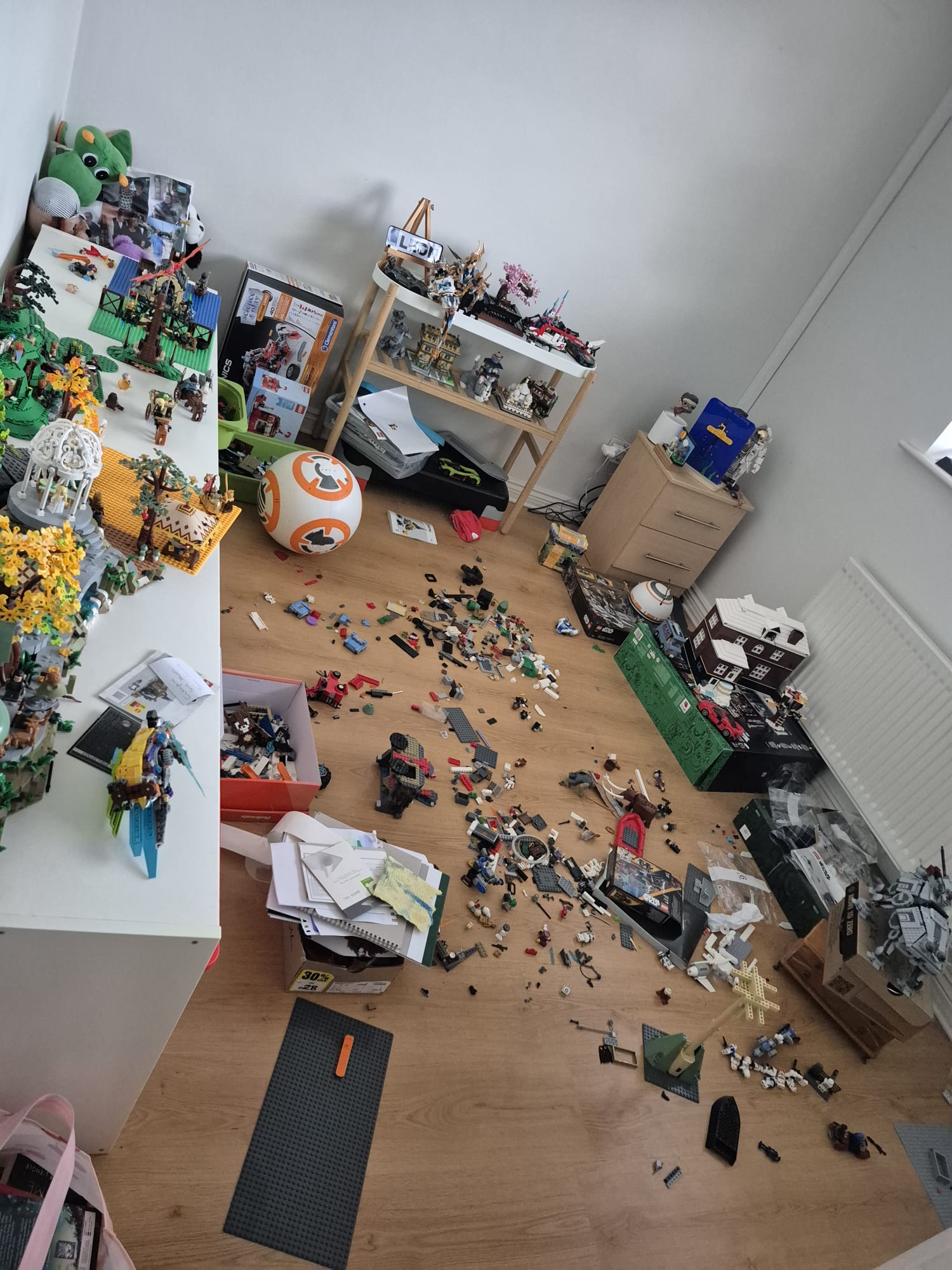
This week, while I was supposed to be writing a tender response document, I found myself doing something that felt very productive: turning my son’s LEGO room into a study. He is doing his Junior Cert this year and needs somewhere to work, so it was easy to justify.
“It was avoidance dressed up as productivity.”
The room was a mess: LEGO everywhere, half-built sets, instruction booklets, and BB-8 rolling around the floor. It was visible, fixable, and satisfying, exactly the kind of problem that is hard to ignore. The tender response document, on the other hand, was harder, quieter, and much easier to postpone.
It was avoidance dressed up as productivity. And that is what makes active procrastination so convincing: the task is not pointless. It may even be genuinely useful. It is just not the work that matters most right now. But it reminded me of something important: even with experience and deadlines, we are not immune to getting in our own way. And if we do not recognise the pattern, we repeat it.
I committed to one hour, finished what I needed to finish, and kept the distraction contained. The room is not perfect, and my son will finish the rest, but that was the point: I did enough to meet the real need without letting it take over the day.
What This Reveals About Active Procrastination
We all know what procrastination looks like when it is obvious: scrolling, tidying, reorganising the filing system, or endlessly tweaking content on our websites. But there is a more sophisticated version that shows up in busy professionals, leaders, and founders: active procrastination.
Active procrastination is staying busy with work that feels useful, visible, and easy to justify while avoiding the harder work that would create the most value. It feels responsible because something is getting done, but it keeps us beside the bike instead of on it, moving forward.
“Active procrastination is clever. It feels productive and responsible. It feels like progress.”
Sometimes it looks like fixating on perfection, such as making sure a presentation deck is perfectly aligned instead of reviewing the content, checking whether it suits the audience, seeking feedback, or doing a dry run. We disguise avoidance as progress. That same pattern often appears when leaders begin exploring AI: they optimise visible tasks before questioning whether those tasks still deserve attention.
The Trap: Doing More Instead of Doing What Matters
When teams start thinking about AI, the instinct is often to automate everything: map the process, document the workflow, build the system, optimise the steps. But as a company grows, some processes simply no longer fit. Automating those processes does not enable growth; it preserves outdated ways of working and makes them harder to challenge later.
“Sometimes the biggest barrier to progress is us.”
Before applying AI to anything, pause and ask three simple questions.
Does this need to be done at all? We inherit tasks and rituals that no longer serve us. Some exist only because they always have, not because they still add value.
Does this need to be done now? Urgency is often self‑created. We tell ourselves something must happen tonight, when later in the week is generally fine. False pressure leads to misplaced priorities.
Does this need to be done by me? We often cling to tasks that make us feel busy or in control, even when they are not the best use of our time. As the business grows, our role must grow with it. Some work needs our input; much of it does not.
These questions are uncomfortable because they expose the truth: sometimes the biggest barrier to progress is us.
Reflection: Where Outside Perspective Helps
When we review how we run our business, or describe it to someone external, these tendencies become easier to spot. The patterns we miss day to day suddenly stand out: the task we keep holding onto, the process we keep improving instead of questioning, or the decision we keep delaying because it feels uncomfortable.
This is often where a consultant or mentor can help by giving us a clearer view of our current process, helping us define what the next stage should look like, and mapping out how to get there. Even if we are not ready to let go of certain habits fully, we can still minimise their impact by setting boundaries, challenging our assumptions, and getting clearer on what actually moves the needle.
Where AI Fits In and Where It Does Not
For me, the lesson was not to ignore the LEGO room. It was to notice what I was choosing, put a boundary around it, and get back to the work that mattered. That is the same discipline businesses need before they automate, delegate, or redesign anything.
“The first step in any AI adoption is not automation, it is reflection.”
AI is extraordinary at reducing friction, speeding up workflows, and freeing us from repetitive tasks. If I had asked AI to help me tackle the LEGO room, it might have given me a brilliant method for sorting pieces by colour, set, size, or type. It could have made the distraction more efficient. It still would not have made it the right priority.
That is the risk. AI amplifies clarity, but it can also amplify avoidance. If a process, task, or habit no longer deserves attention, doing it faster does not create progress. It simply gives our avoidance better tools.
This is why the first step in any AI adoption is not automation, it is reflection.
The Leadership Shift: From Doing More to Doing What Matters
Active procrastination is a leadership challenge, not a personal flaw. It shows up when we are overwhelmed, uncertain, avoiding discomfort, clinging to control, or afraid of the outcome of the real task.
AI will not solve that. But it will give us the space to solve it if we choose wisely.
The leaders who thrive with AI are not the ones who automate the most. They are the ones who ask the right questions before they automate anything.
A Simple Practice to Break the Cycle
Before starting any task, especially one you are tempted to optimise or automate, pause and ask:
Should this be done?
Should this be done now?
Should this be done by me?
If the answer to any of these is “no,” that is your signal. If the answer to all three is “yes,” that is your work. If you are unsure, that is where AI can help you think, not just do.
A Final Point
And if I am being honest, I could argue that I have been actively procrastinating while writing this article. But I do not believe that is true. This topic came up repeatedly in conversations with clients this week, and capturing it while it is fresh is a good use of time. It is a priority call, not avoidance.
Active procrastination is clever. It feels productive and responsible. It feels like progress. But it is often the thing standing between us and the work that actually moves the needle.
AI can help us work smarter, but only if we stop getting in our own way first.
So the question is not just what can AI help you do faster. The better question is: what are you currently doing that no longer deserves your attention.
“If you’re unsure, that’s where AI can help you think, not just do.”
If you are ready to go beyond the to‑do list and get clear on what truly matters, what should be done, what should not, and what AI can take off your plate, you can reach me at Jane@EverydayBusiness.ie to book a discovery call.